

Practical Responsible Gambling Tools for Canadian Players
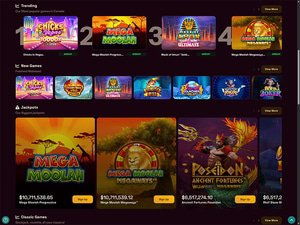
Responsible gambling is easier when practical controls are considered before entertainment becomes a habit. The information associated with casino grizzlys quest describes several account-level tools, including deposit limits, session reminders, self-assessment information and self-exclusion. These options do not remove all risk, and their availability can depend on account status, location and support procedures. A sensible approach is to understand what each control does, decide which one fits your circumstances and treat any difficulty maintaining limits as a reason to pause rather than increase play.
Start with a limit that matches your actual budget
A deposit limit is a forward-looking boundary on how much money can be added over a selected period. The available descriptions refer to daily, weekly and monthly settings in the banking or account area. Choosing one is more useful when it is based on money left after rent, food, bills, debt payments and ordinary savings, rather than on a hoped-for win. Gambling money should be an entertainment expense that can be lost without affecting essentials.

Consider setting a limit before making a first deposit, then write down the amount and the period it covers. A monthly ceiling may be easier to compare with a household budget, while a weekly ceiling can provide tighter control for someone who tends to play frequently. Do not treat a limit as a target. If the account reaches it early, adding funds through another method or opening another account undermines the purpose of the control.
Limits also deserve review after changes in income, work, health or household responsibilities. A setting that seemed affordable several months ago may no longer be appropriate. Check whether the selected control restricts deposits, spending or another account activity, because those terms can differ between operators. If the account does not clearly explain how a limit works, ask support before depositing. Never borrow money or use essential funds to continue gambling.
Use session reminders to interrupt automatic play
Time can feel shorter during continuous play, particularly when games load quickly and results appear immediately. Session reminders are intended to interrupt that pattern by showing how long a player has been active. The published information identifies session reminders as a responsible-gambling feature, but it does not establish the exact interval, message format or whether a player can customize every setting.
When a reminder appears, stop long enough to assess the original plan. Ask whether the session is still within the time and money boundaries chosen beforehand, and whether the activity still feels like entertainment. A short break away from the screen can make that assessment more realistic. Check the account history or transaction records as well, since memory often understates how many deposits or wagers have been made.
Reminders work best alongside a personal routine. Set an alarm outside the gambling account, avoid playing when tired or upset, and keep devices away during planned breaks. Do not disable or ignore a reminder simply because a game is close to a bonus feature, jackpot round or preferred result. There is no reliable point at which continued play becomes more likely to produce a desired outcome, and chasing a previous loss usually increases financial pressure.
When should self-assessment lead to a pause?
Self-assessment information can help identify patterns before they become more serious. Useful questions include whether gambling has become a way to escape stress, whether losses are being chased, whether secrecy is increasing, and whether play interferes with sleep, work or relationships. Difficulty stopping at a chosen time is also important, even if the financial amount appears manageable.
A concerning answer does not require a diagnosis, but it does justify a pause. Sign out, remove saved payment details where possible and avoid making a new deposit while deciding what to do next. Speak with someone trusted and keep a clear record of money and time spent. If gambling is causing distress, financial harm or conflict, professional support is more appropriate than trying to solve the problem through stricter play alone.
For general information about gambling-related harm and support considerations, readers can consult problem gambling information from CAMH. This type of public-health guidance is not a confirmation of any casino-specific feature or policy. It can, however, provide useful context when deciding whether a break, conversation with a counsellor or longer-term support would be sensible.

Choose self-exclusion when ordinary limits are not enough
Self-exclusion is a stronger account-control measure than a deposit limit. It is designed for someone who wants gambling access restricted for a defined period or under a more durable arrangement. The available material indicates that self-exclusion is offered, while some requests may need to be made through support. The exact duration, effect on existing balances and treatment of promotional funds should therefore be confirmed before submitting a request.
Do not wait for a major loss before considering it. Self-exclusion may be appropriate when limits are repeatedly increased, reminders are ignored, or gambling continues despite personal, financial or relationship consequences. Contact support using the account’s stated channel and keep a record of the request. If access continues while a request is being processed, do not regard that as permission to keep playing; ask for clarification and take independent steps to block access.
Practical barriers can support the decision. Remove gambling shortcuts, use device or network blocking tools, ask a bank whether gambling-payment restrictions are available, and tell a trusted person what you are doing. These measures are not substitutes for formal self-exclusion, and no single tool can guarantee complete protection. If immediate financial or emotional safety is a concern, prioritize personal support and urgent local assistance over account administration.
Check the provincial context before relying on a tool
Responsible-gambling features are not necessarily identical across Canadian provinces. The available information says the service operates in parts of Canada, is not registered with iGaming Ontario and describes promotions as unavailable to Ontario residents. It also says that local eligibility depends on province and applicable terms. These points show why a tool’s presence should not be treated as proof that an account is available everywhere or governed by the same arrangements.
Before opening or funding an account, confirm the current eligibility requirements for your province and read the responsible-gambling terms displayed for the account. Pay attention to age and residency conditions, how limits are applied, whether support must activate a restriction and what happens to access after self-exclusion. A licence display or Canadian interface does not, by itself, answer every provincial question about availability or consumer protection.
Keep screenshots or written notes of selected limits, support conversations and exclusion requests. This is especially useful if instructions are unclear or if several controls are managed in different parts of the account. If a feature is missing, difficult to activate or inconsistent with the stated terms, pause gambling and seek clarification rather than testing the boundary with another deposit. Responsible tools are most effective when used early, deliberately and without attempts to bypass them.
Questions about responsible gambling controls
Can a deposit limit prevent every gambling loss?
No. A deposit limit can restrict money added through an account, but it may not account for existing balances, other accounts, cash spending or funds borrowed elsewhere. It is one layer of protection, not a guarantee. Pair it with a budget, time boundaries, independent blocking measures and support when control is becoming difficult.
What should I do if I cannot stop after reaching a limit?
Stop the session and do not add funds through another method. Record what happened, contact support about stronger account restrictions and consider self-exclusion. Tell a trusted person and seek professional help if gambling is affecting finances, sleep, work or relationships. Repeatedly bypassing a limit is a warning sign, not a reason to set a higher one.
Are responsible-gambling settings the same in every province?
Not necessarily. Availability, eligibility and activation procedures can depend on the province, account terms and local restrictions. Confirm the current rules before relying on a feature, particularly if you live in Ontario or another jurisdiction with different arrangements. If the account’s wording is unclear, ask support and avoid depositing until the position is understood.
